




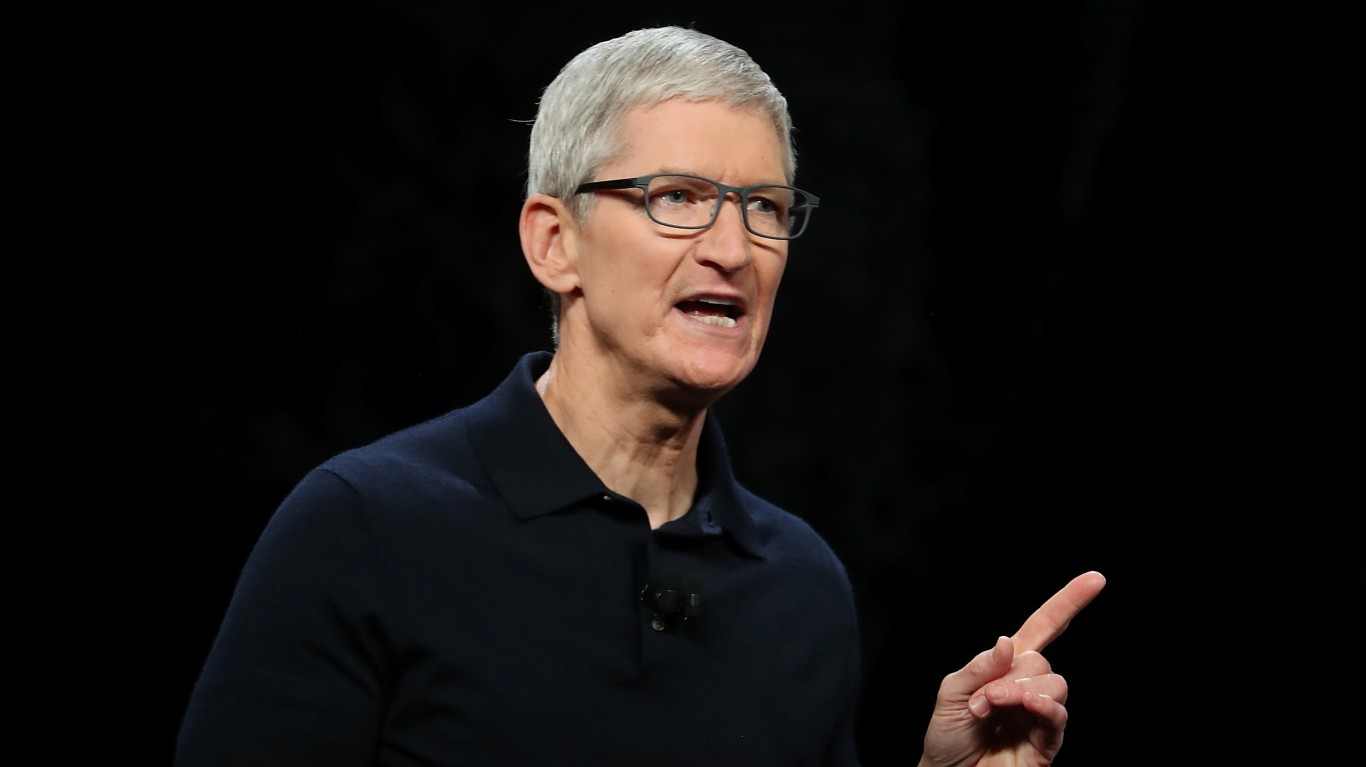
On CNBC’s Squawk on the Street on Monday morning, Jim Cramer and David Faber discussed Apple (NASDAQ:AAPL | AAPL Price Prediction) and its newly filed lawsuit against OpenAI, framing the case as a serious escalation with real IPO consequences. Cramer’s take was that this lawsuit carries weight because Apple rarely files them.
“There are a lot of people who feel that the Apple lawsuit is heavyweight, because it’s not the kind of thing that Apple typically does. They have very good general counsels. They are not prone to suing for the sake of suing,” Cramer said, referencing the parallel Elon Musk and Sam Altman feud playing out on X.
Apple Says OpenAI Stole Trade Secrets and iPhone Technology
According to filings and coverage circulating July 12 and 13, Apple sued OpenAI, its subsidiary IO Products, former Apple VP Tang Tan (now OpenAI’s Chief Hardware Officer), and former Apple employee Chang Liu, accusing them of a coordinated effort to misappropriate confidential hardware information and unannounced product details.
The complaint alleges former Apple employees copied confidential materials and brought hardware prototypes into OpenAI interviews. The suit specifically accuses OpenAI of stealing trade secrets and iPhone technology.
OpenAI’s response has been dismissive. Sam Altman said he is “not afraid of Apple,” expressed “tremendous respect” for the company, and called Apple an “S-tier company,” while OpenAI stated it is “reviewing the filing” and has “no interest in competitors’ trade secrets.”
Why Apple’s Lawsuit Could Be the Real Deal
Faber noted the case lands as OpenAI is moving toward a potential public offering. “Doesn’t help the S-1, right?” he added, before noting the severity of the issue: “I think it’s serious. I come down on the serious side… don’t you for a minute fall for this thing [being] just classic Silicon Valley going at it… when I speak to the people on this who are on the Apple side, it’s just a highly rare [move].”
Cramer acknowledged the counter-view. “There are serious people who are taking the side of OpenAI on this case… saying this is Apple just trying to stall. But there are a lot of people who just say, look, Tim Cook would not do this unless he really and truly believed that they’re just stealing,” he said. Apple reported that over 400 employees have moved to working for OpenAI over the years, which makes the trade-secret theory both plausible and legally messy.
Elon Musk and Sam Altman’s Feud Is Just the Sideshow
Running alongside the litigation, Elon Musk accused Sam Altman of scamming, calling him a scammer on X, and Altman fired back at Musk’s space data center plans.
As entertaining as the exchange is, the Apple complaint carries real balance-sheet consequences for OpenAI’s IPO paperwork.
Apple Investors Are Looking Straight Past the OpenAI Fight
Apple has a market cap of roughly $4.63 trillion, with the stock at $316.98, up 16.2% year to date and 49.04% over the past year. Citi just raised its price target to $365 from $315, citing margin expansion and share gains. On fundamentals, Apple’s most recent quarter delivered revenue of $111.18 billion, up 16.6% year over year, with diluted EPS of $2.01 and record Services revenue of $30.98 billion.
What to Watch Next
Apple’s July 30 earnings report and September iPhone launch remain the biggest near-term events for shareholders, but the OpenAI lawsuit introduces a separate risk that could grow over time. Early court filings and the discovery process may reveal whether former Apple employees actually brought confidential hardware information to OpenAI or whether the case is primarily an attempt to slow a new competitor.
The lawsuit could also complicate OpenAI’s path toward an IPO. If Apple’s allegations gain credibility, OpenAI may need to disclose the case as a material legal risk in its S-1 filing. The public feud may generate attention, but the lawsuit’s potential effect on OpenAI’s offering could carry much greater financial consequences.
Contact [email protected] for any questions or corrections.








 Top Gaining Stocks
 Top Losing Stocks